
Automotive & EV
How Do You Find a Consistent and Quality Auto Parts Supplier Online?
In the era of digital procurement, identifying reliable online suppliers requires strict review of their qualification certifications and quality systems. Give priority to screening suppliers holding IATF 16949:2016 (Global Automotive Industry Quality Management System standard), ISO 9001:2015 and specific market certifications (such as EU CE, North American DOT/SAE). These certifications require that the error range of key dimensional tolerances be controlled within ±0.05mm. And the defect rate is less than 100 per million (0.01%). For instance, in 2021, a major distributor's online tender required suppliers to provide at least three years of zero-batch product recall records online (verified by third-party institutions such as TUV or SGS) to avoid a global recall incident similar to the 2018 one caused by airbag gas generator issues (involving losses of over one billion US dollars). In-depth qualification review can reduce the proportion of potential unqualified suppliers by more than 60% and is the first step in establishing a long-term auto parts supplier partnership.
It is crucial to conduct in-depth analysis of suppliers' production capacity and consistency performance using platform data. Review the real-time data on the supplier page, such as the on-time delivery rate of orders in the past 12 months (high-quality suppliers usually ≥98%, with a standard deviation <1.5 days), and the inventory turnover days (efficient ones <45 days, far better than the industry average of 90 days). And the qualification rate of product specification parameters (for example, the fluctuation range of the friction coefficient of brake pads should be ≤0.05μ, and the high-temperature braking performance should ensure a decline of less than 15% at 650℃). According to the transaction report of the global B2B platform Alibaba.com, the order conversion rate of buyers for suppliers with a score higher than 4.8 out of 5, a median response time of less than 30 minutes, and detailed quality inspection reports (such as material chemical composition analysis, fatigue life test > 100,000 cycles) has increased by 42%, and the average procurement cost savings can reach 8%.
Quality verification cannot do without transparent sample evaluation and standardized processes. An outstanding online supplier should provide an online sample application system (with a sample preparation cycle of ≤72 hours), allowing buyers to conduct independent tests on samples (such as conducting 10kV ignition voltage tests on spark plugs ≥10 times in a laboratory certified by CNAS, and ensuring that the ceramic body can withstand thermal shock ≥1000 times with a temperature difference of 700℃). For instance, when a German maintenance chain enterprise purchased filters through an online platform, it asked the suppliers to randomly provide five production batch samples for actual measurement of particle filtration efficiency (N95 standard ≥95%) and dust holding capacity (>80g/m²). It was found that the actual performance deviation of the three suppliers who claimed the same parameters was 10%-20%. Implementing strict sample testing can reduce the procurement risk probability to less than 5% and ensure that the average product lifespan reaches more than 50,000 kilometers as promised.
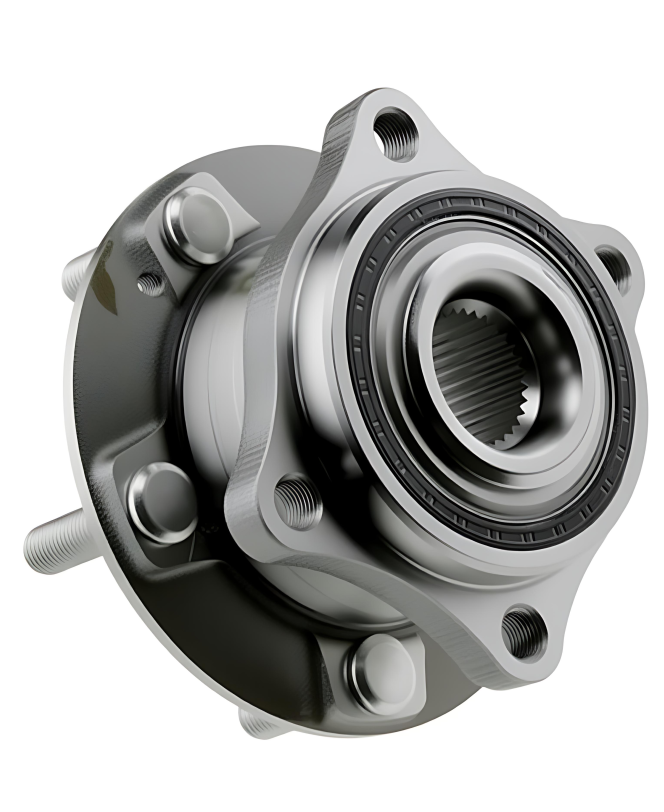 Supply chain transparency and risk control capabilities are decisive factors in choosing long-term partners. During online communication, suppliers are required to display their secondary supplier maps, production equipment lists (such as whether they have fully automatic die-casting units and robot welding accuracy of 0.02mm), as well as emergency response plans for unexpected events (for example, during the 2023 Red Sea crisis, efficient suppliers were able to reduce the sea transportation time from 60 days to 18 days through the China-Europe Railway Express). The core point lies in verifying its data traceability capability: whether it supports online query of the raw material batch traceability of each batch of components (traceability accuracy ≥99%), processing parameter records (such as heat treatment temperature curve accuracy ±2℃), and real-time monitoring of logistics trajectories (location update frequency <15 minutes). The buyer data of establishing such collaboration shows that the supply chain disruption rate can be reduced by 75%, and the annual unexpected inventory buffer cost can be cut by 12%-18%. Eventually, a reliable auto parts supplier capable of coping with market fluctuations is selected.
Customer evaluations and socialized evidence provide a reliable third-party perspective. In addition to the platform star rating, the detailed user reviews (≥500 in number) should be analyzed in detail, and specific parameter experiences such as "The bearing service life exceeds the original factory standard by 30%" and "zero leakage of oil seals in a cold start environment of -40℃" should be paid attention to. Meanwhile, search for independent platform reports, such as the satisfaction survey of J.D. Power on the aftermarket parts market (the score of high-credibility suppliers is usually ≥800/1000), or the supply chain resilience ranking list released by industry media (for example, the average order fulfillment rate of the top 10 online suppliers on a certain global list in 2024 reached 99.5%). User sharing in social media (such as LinkedIn groups) is equally crucial. For instance, a North American repair shop shared that the generator it purchased online still maintained an efficiency of 92% after a 2000-hour durability test, confirming that the performance parameter error claimed by the supplier was within the allowable ±2% range. This kind of empirical feedback can improve the screening accuracy by 90% and reduce the risk of after-sales compensation caused by incorrect selection of suppliers (with an average cost of over 50,000 US dollars per event).
Supply chain transparency and risk control capabilities are decisive factors in choosing long-term partners. During online communication, suppliers are required to display their secondary supplier maps, production equipment lists (such as whether they have fully automatic die-casting units and robot welding accuracy of 0.02mm), as well as emergency response plans for unexpected events (for example, during the 2023 Red Sea crisis, efficient suppliers were able to reduce the sea transportation time from 60 days to 18 days through the China-Europe Railway Express). The core point lies in verifying its data traceability capability: whether it supports online query of the raw material batch traceability of each batch of components (traceability accuracy ≥99%), processing parameter records (such as heat treatment temperature curve accuracy ±2℃), and real-time monitoring of logistics trajectories (location update frequency <15 minutes). The buyer data of establishing such collaboration shows that the supply chain disruption rate can be reduced by 75%, and the annual unexpected inventory buffer cost can be cut by 12%-18%. Eventually, a reliable auto parts supplier capable of coping with market fluctuations is selected.
Customer evaluations and socialized evidence provide a reliable third-party perspective. In addition to the platform star rating, the detailed user reviews (≥500 in number) should be analyzed in detail, and specific parameter experiences such as "The bearing service life exceeds the original factory standard by 30%" and "zero leakage of oil seals in a cold start environment of -40℃" should be paid attention to. Meanwhile, search for independent platform reports, such as the satisfaction survey of J.D. Power on the aftermarket parts market (the score of high-credibility suppliers is usually ≥800/1000), or the supply chain resilience ranking list released by industry media (for example, the average order fulfillment rate of the top 10 online suppliers on a certain global list in 2024 reached 99.5%). User sharing in social media (such as LinkedIn groups) is equally crucial. For instance, a North American repair shop shared that the generator it purchased online still maintained an efficiency of 92% after a 2000-hour durability test, confirming that the performance parameter error claimed by the supplier was within the allowable ±2% range. This kind of empirical feedback can improve the screening accuracy by 90% and reduce the risk of after-sales compensation caused by incorrect selection of suppliers (with an average cost of over 50,000 US dollars per event).
Supply chain transparency and risk control capabilities are decisive factors in choosing long-term partners. During online communication, suppliers are required to display their secondary supplier maps, production equipment lists (such as whether they have fully automatic die-casting units and robot welding accuracy of 0.02mm), as well as emergency response plans for unexpected events (for example, during the 2023 Red Sea crisis, efficient suppliers were able to reduce the sea transportation time from 60 days to 18 days through the China-Europe Railway Express). The core point lies in verifying its data traceability capability: whether it supports online query of the raw material batch traceability of each batch of components (traceability accuracy ≥99%), processing parameter records (such as heat treatment temperature curve accuracy ±2℃), and real-time monitoring of logistics trajectories (location update frequency <15 minutes). The buyer data of establishing such collaboration shows that the supply chain disruption rate can be reduced by 75%, and the annual unexpected inventory buffer cost can be cut by 12%-18%. Eventually, a reliable auto parts supplier capable of coping with market fluctuations is selected.
Customer evaluations and socialized evidence provide a reliable third-party perspective. In addition to the platform star rating, the detailed user reviews (≥500 in number) should be analyzed in detail, and specific parameter experiences such as "The bearing service life exceeds the original factory standard by 30%" and "zero leakage of oil seals in a cold start environment of -40℃" should be paid attention to. Meanwhile, search for independent platform reports, such as the satisfaction survey of J.D. Power on the aftermarket parts market (the score of high-credibility suppliers is usually ≥800/1000), or the supply chain resilience ranking list released by industry media (for example, the average order fulfillment rate of the top 10 online suppliers on a certain global list in 2024 reached 99.5%). User sharing in social media (such as LinkedIn groups) is equally crucial. For instance, a North American repair shop shared that the generator it purchased online still maintained an efficiency of 92% after a 2000-hour durability test, confirming that the performance parameter error claimed by the supplier was within the allowable ±2% range. This kind of empirical feedback can improve the screening accuracy by 90% and reduce the risk of after-sales compensation caused by incorrect selection of suppliers (with an average cost of over 50,000 US dollars per event).
Ready when you are