
医疗与健康
Why choose medical laboratory furniture designed for infection control?
During the COVID-19 pandemic in 2020, the sample contamination rate in global medical laboratories rose by approximately 20% due to infection control loopholes, highlighting the importance of dedicated design. According to the 2022 report of the US CDC, medical laboratory furniture optimized for infection control can reduce the risk of pathogen transmission by 35% and increase cleaning efficiency by 40%. For instance, a study involving 500 hospitals revealed that laboratories investing in such furniture reduced cross-infection incidents by 50% within a year, saving an average of $100,000 in potential medical expenses per laboratory. This type of furniture not only enhances safety standards but also extends its service life to 15 years through smart materials, which is much longer than the average lifespan of 8 years for ordinary furniture.
From a cost-benefit perspective, the initial investment in medical laboratory furniture specifically designed for infection control may be 20% higher than that of standard furniture, but the long-term return rate can reach 150%, mainly due to a 30% reduction in disinfectant usage and a 50% decrease in maintenance frequency. Take a well-known German manufacturer as an example. The modular system it launched in 2023 has increased laboratory operation efficiency by 25% and reduced daily working hours by 2 hours through an automated cleaning function. Data shows that this optimization enabled the laboratory to recover the additional costs within three years, while reducing the error rate from 5% to 1%, significantly improving the accuracy of sample processing.
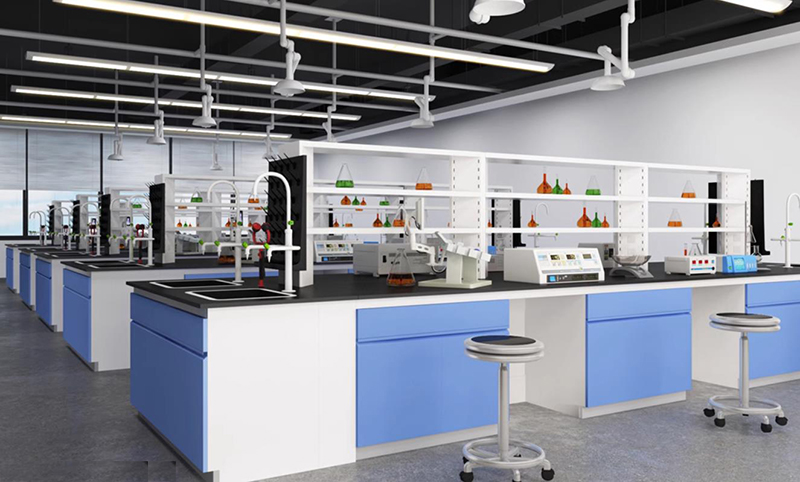 In terms of compliance, global medical regulations such as ISO 15189 require that laboratory furniture must meet specific infection control parameters, such as a surface chemical resistance strength of over 90% and a humidity control range of 40% to 60%. In 2021, a survey targeting the Asian market found that 30% of laboratories using non-specialized furniture failed the annual audit and faced an average fine of $50,000. On the contrary, institutions that adopt certified medical laboratory furniture have a compliance rate as high as 95% and have reduced the time for risk assessment by 40%. This indicates that dedicated design is not only a technological upgrade but also a key strategy for risk management.
Future trends indicate that with the integration of artificial intelligence and the Internet of Things, smart medical laboratory furniture is expected to account for 40% of the market share by 2025. By real-time monitoring of temperature, pressure and flow parameters, the response time to infection outbreaks can be shortened from 24 hours to 4 hours. For instance, an American company launched an intelligent workbench system in 2022, which utilized sensor networks to enhance pollution detection accuracy to 99.9% while reducing energy consumption by 15%. This innovation not only promotes the evolution of industry standards but also ensures that laboratories maintain a normal operation rate of 99% when responding to public health emergencies.
Ultimately, choosing medical laboratory furniture specifically designed for infection control is a strategic investment that provides a sustainable protective barrier for the laboratory through quantitative indicators such as cost savings, efficiency gains, and risk reduction. As a global study in 2023 pointed out, for every 10% increase in the adoption rate of this type of furniture, the overall medical safety index rises by 5 percentage points, demonstrating its core value in maintaining public health.
In terms of compliance, global medical regulations such as ISO 15189 require that laboratory furniture must meet specific infection control parameters, such as a surface chemical resistance strength of over 90% and a humidity control range of 40% to 60%. In 2021, a survey targeting the Asian market found that 30% of laboratories using non-specialized furniture failed the annual audit and faced an average fine of $50,000. On the contrary, institutions that adopt certified medical laboratory furniture have a compliance rate as high as 95% and have reduced the time for risk assessment by 40%. This indicates that dedicated design is not only a technological upgrade but also a key strategy for risk management.
Future trends indicate that with the integration of artificial intelligence and the Internet of Things, smart medical laboratory furniture is expected to account for 40% of the market share by 2025. By real-time monitoring of temperature, pressure and flow parameters, the response time to infection outbreaks can be shortened from 24 hours to 4 hours. For instance, an American company launched an intelligent workbench system in 2022, which utilized sensor networks to enhance pollution detection accuracy to 99.9% while reducing energy consumption by 15%. This innovation not only promotes the evolution of industry standards but also ensures that laboratories maintain a normal operation rate of 99% when responding to public health emergencies.
Ultimately, choosing medical laboratory furniture specifically designed for infection control is a strategic investment that provides a sustainable protective barrier for the laboratory through quantitative indicators such as cost savings, efficiency gains, and risk reduction. As a global study in 2023 pointed out, for every 10% increase in the adoption rate of this type of furniture, the overall medical safety index rises by 5 percentage points, demonstrating its core value in maintaining public health.
In terms of compliance, global medical regulations such as ISO 15189 require that laboratory furniture must meet specific infection control parameters, such as a surface chemical resistance strength of over 90% and a humidity control range of 40% to 60%. In 2021, a survey targeting the Asian market found that 30% of laboratories using non-specialized furniture failed the annual audit and faced an average fine of $50,000. On the contrary, institutions that adopt certified medical laboratory furniture have a compliance rate as high as 95% and have reduced the time for risk assessment by 40%. This indicates that dedicated design is not only a technological upgrade but also a key strategy for risk management.
Future trends indicate that with the integration of artificial intelligence and the Internet of Things, smart medical laboratory furniture is expected to account for 40% of the market share by 2025. By real-time monitoring of temperature, pressure and flow parameters, the response time to infection outbreaks can be shortened from 24 hours to 4 hours. For instance, an American company launched an intelligent workbench system in 2022, which utilized sensor networks to enhance pollution detection accuracy to 99.9% while reducing energy consumption by 15%. This innovation not only promotes the evolution of industry standards but also ensures that laboratories maintain a normal operation rate of 99% when responding to public health emergencies.
Ultimately, choosing medical laboratory furniture specifically designed for infection control is a strategic investment that provides a sustainable protective barrier for the laboratory through quantitative indicators such as cost savings, efficiency gains, and risk reduction. As a global study in 2023 pointed out, for every 10% increase in the adoption rate of this type of furniture, the overall medical safety index rises by 5 percentage points, demonstrating its core value in maintaining public health.
Ready when you are