
Science
How is trifluoromethanesulfonic anhydride used in synthesis?
In the field of organic synthesis, trifluoromethanesulfonic anhydride, as a super-acylating reagent and activator, is estimated to have a global annual output of over 1,000 tons, with a market price of approximately $500 to $800 per kilogram. Its high cost is offset by its unrivaled reactivity. Its core function lies in efficiently converting functional groups such as alcohols, phenols, and even amides into the corresponding trifluoromethanesulfonate (triflate). This conversion reaction is typically carried out in an inert atmosphere ranging from -78 °C to room temperature, taking only 10 to 30 minutes. The yield is often above 95%, and the proportion of by-products can be controlled below 2%. For instance, in the reaction of converting tert-butanol with a relatively high steric hindrance to tert-butyl trifluoromethanesulfonate, using 1.1 equivalent trifluoromethanesulfonate anhydride in dichloromethane solvent, the conversion rate can reach 99%. This provides a crucial highly active intermediate for the subsequent construction of carbon-carbon bonds, functioning like installing a highly reactive "spring emitter" for the molecule.
In the cross-coupling reaction for constructing carbon-carbon bonds, the trifluoromethyl sulfonate ester group (-OTf) is an indispensable leaving group, and its reactivity is approximately 10^4 to 10^6 times higher than that of traditional halogen atoms (such as -Cl, -Br). This characteristic enables vinyl trifluoromethanesulfonate or aryl trifluoromethanesulfonate prepared from trifluoromethanesulfonate to undergo Suzuki coupling reaction with boric acid under palladium catalysis (the catalyst loading can be as low as 0.5 mol%), with the reaction temperature reduced to 50°C, the reaction time shortened to 1 hour, and the yield stabilized at over 90%. Referring to Pfizer's research on the synthetic process of its star antidepressant sertrolin, a key step in the early route was precisely the activation of a specific ketone intermediate using trifluoromethanesulfonic anhydride, which increased the total yield of the subsequent coupling reaction by nearly 20% and significantly optimized the atomic economy of the entire 15-step synthetic route. This is like using high-strength "chemical rivets" in complex molecular architecture.
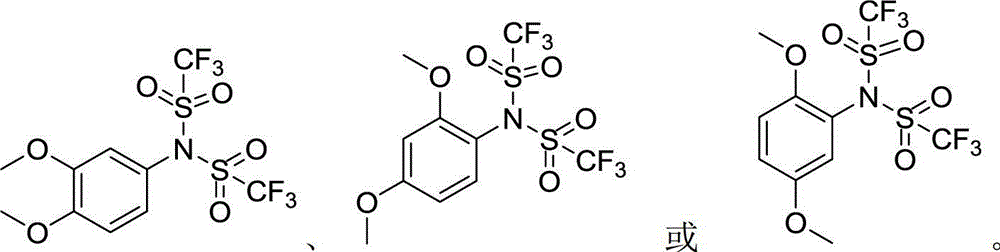 In addition to serving as an activator, trifluoromethanesulfonic anhydride is also a key reagent for introducing the trifluoromethanesulfonyl group (-SO2CF3), an important pharmacophore group, which features high lipophilicity, strong electron-absorbing effect and excellent metabolic stability. In the reaction with aromatic amines, at a molar ratio of 1:1, when refluxed in acetonitrile under alkaline conditions for 2 hours, trifluoromethanesulfonamide compounds can be produced in 85% yield. According to a 2021 structure-activity relationship study on anti-cancer lead compounds, after the introduction of trifluoromethanesulfonyl groups, the in vitro activity (IC50 value) of the target molecules jumped from the micro-molar level to the nanomolar level, with efficacy increasing nearly 100 times. At the same time, its half-life in mice was extended by approximately 50%. This fully demonstrates the strategic value of this reagent in the optimization of drug chemical structures.
In materials science and polymer chemistry, trifluoromethanesulfonic anhydride, as an efficient Lewis acid catalyst, has a strength more than ten times that of traditional aluminum trichloride and can be used to initiate cationic polymerization. For instance, when synthesizing polyisobutylene of a specific specification, only 50 parts per million (ppm) of this reagent needs to be added. In a methyl chloride solvent at -70 °C, a high-quality polymer with a molecular weight distribution index (PDI) lower than 1.2 and a number-average molecular weight exceeding 100,000 can be obtained within one hour. However, its extremely strong corrosiveness (capable of corroding glass) and the characteristic of intense hydrolysis upon contact with water (releasing a large amount of heat and corrosive trifluoromethanosulfonic acid) require that the operation must be carried out in a glove box with a humidity of less than 1% and equipped with a Teflon material reactor. The cost of safety risk control accounts for approximately 15% of the total raw material cost. Despite this, as a 2023 review on sustainable catalysis pointed out, by developing their immobilization or sustained-release technologies, it is expected that their utilization efficiency can be increased by another 30% in the future, and the generation of hazardous waste can be reduced by 90%. This indicates that even "strong" reagents are evolving towards a greener direction.
In addition to serving as an activator, trifluoromethanesulfonic anhydride is also a key reagent for introducing the trifluoromethanesulfonyl group (-SO2CF3), an important pharmacophore group, which features high lipophilicity, strong electron-absorbing effect and excellent metabolic stability. In the reaction with aromatic amines, at a molar ratio of 1:1, when refluxed in acetonitrile under alkaline conditions for 2 hours, trifluoromethanesulfonamide compounds can be produced in 85% yield. According to a 2021 structure-activity relationship study on anti-cancer lead compounds, after the introduction of trifluoromethanesulfonyl groups, the in vitro activity (IC50 value) of the target molecules jumped from the micro-molar level to the nanomolar level, with efficacy increasing nearly 100 times. At the same time, its half-life in mice was extended by approximately 50%. This fully demonstrates the strategic value of this reagent in the optimization of drug chemical structures.
In materials science and polymer chemistry, trifluoromethanesulfonic anhydride, as an efficient Lewis acid catalyst, has a strength more than ten times that of traditional aluminum trichloride and can be used to initiate cationic polymerization. For instance, when synthesizing polyisobutylene of a specific specification, only 50 parts per million (ppm) of this reagent needs to be added. In a methyl chloride solvent at -70 °C, a high-quality polymer with a molecular weight distribution index (PDI) lower than 1.2 and a number-average molecular weight exceeding 100,000 can be obtained within one hour. However, its extremely strong corrosiveness (capable of corroding glass) and the characteristic of intense hydrolysis upon contact with water (releasing a large amount of heat and corrosive trifluoromethanosulfonic acid) require that the operation must be carried out in a glove box with a humidity of less than 1% and equipped with a Teflon material reactor. The cost of safety risk control accounts for approximately 15% of the total raw material cost. Despite this, as a 2023 review on sustainable catalysis pointed out, by developing their immobilization or sustained-release technologies, it is expected that their utilization efficiency can be increased by another 30% in the future, and the generation of hazardous waste can be reduced by 90%. This indicates that even "strong" reagents are evolving towards a greener direction.
In addition to serving as an activator, trifluoromethanesulfonic anhydride is also a key reagent for introducing the trifluoromethanesulfonyl group (-SO2CF3), an important pharmacophore group, which features high lipophilicity, strong electron-absorbing effect and excellent metabolic stability. In the reaction with aromatic amines, at a molar ratio of 1:1, when refluxed in acetonitrile under alkaline conditions for 2 hours, trifluoromethanesulfonamide compounds can be produced in 85% yield. According to a 2021 structure-activity relationship study on anti-cancer lead compounds, after the introduction of trifluoromethanesulfonyl groups, the in vitro activity (IC50 value) of the target molecules jumped from the micro-molar level to the nanomolar level, with efficacy increasing nearly 100 times. At the same time, its half-life in mice was extended by approximately 50%. This fully demonstrates the strategic value of this reagent in the optimization of drug chemical structures.
In materials science and polymer chemistry, trifluoromethanesulfonic anhydride, as an efficient Lewis acid catalyst, has a strength more than ten times that of traditional aluminum trichloride and can be used to initiate cationic polymerization. For instance, when synthesizing polyisobutylene of a specific specification, only 50 parts per million (ppm) of this reagent needs to be added. In a methyl chloride solvent at -70 °C, a high-quality polymer with a molecular weight distribution index (PDI) lower than 1.2 and a number-average molecular weight exceeding 100,000 can be obtained within one hour. However, its extremely strong corrosiveness (capable of corroding glass) and the characteristic of intense hydrolysis upon contact with water (releasing a large amount of heat and corrosive trifluoromethanosulfonic acid) require that the operation must be carried out in a glove box with a humidity of less than 1% and equipped with a Teflon material reactor. The cost of safety risk control accounts for approximately 15% of the total raw material cost. Despite this, as a 2023 review on sustainable catalysis pointed out, by developing their immobilization or sustained-release technologies, it is expected that their utilization efficiency can be increased by another 30% in the future, and the generation of hazardous waste can be reduced by 90%. This indicates that even "strong" reagents are evolving towards a greener direction.
Ready when you are